

Lifecycle value is now non-negotiable
Councils, facility managers, and education institutions are under increasing pressure to deliver infrastructure that lasts longer, performs better, and costs less to maintain across its entire lifespan. Yet procurement decisions often focus on upfront cost rather than whole-of-life ROI.
For access structures like platforms, boardwalks, ramps, and walkways, this short-term lens can create long-term cost, safety, and operational burdens. Fibre Reinforced Plastic (FRP) is reshaping this narrative. No longer a niche alternative, FRP has become the preferred choice for organisations prioritising lifecycle value. Drawing on insights from ROI assessments such as our recent Niddrie school project, the data shows FRP consistently delivers 30–40% lifecycle savings over steel and timber—while significantly reducing risk.
This article examines why FRP outperforms traditional materials and where the benefits are felt most strongly.
Understanding whole-of-life ROI
Whole-of-life ROI evaluates the total cost of an asset from planning to replacement, including installation, maintenance, repairs, and operational disruptions. For access infrastructure, this spans:
- Material supply and fabrication
- Installation labour and equipment
- Scheduled and reactive maintenance
- Environmental degradation
- Replacement cycles
- Safety-related risk and liability
- Operational downtime
Steel and timber often appear cost-effective at purchase, but their maintenance and replacement requirements erode ROI quickly—especially in coastal or high-traffic settings. FRP’s inherent durability, corrosion resistance, and stability remove many of these lifecycle liabilities entirely.
Side-by-side material performance
A comparative view reveals where FRP materially outperforms steel and timber across key lifecycle factors.
Installation Efficiency
Steel is heavy and requires machinery, hot works, and specialised contractors.
Timber is lighter but needs onsite cutting and frequent adjustments.
FRP’s lightweight, modular nature enables rapid installation—often 25–40% faster—reducing labour, equipment use, and site disruption.
Maintenance Burden
Steel demands ongoing corrosion protection, repainting, and structural repair.
Timber suffers from rot, warping, splintering, and pest attack.
FRP requires virtually no maintenance. It will not corrode, rot, or absorb moisture, and its surfaces remain consistent over time.
Operational Safety
Steel presents slip risks and conductivity issues in electrical environments.
Timber degrades unevenly, creating hazards over time.
FRP provides integrated anti-slip finishes, non-conductive properties, and stable long-term performance—reducing exposure to safety incidents.
Replacement Cycles
Steel structures generally require replacement within 15–20 years.
Timber often lasts less than 10–12 years, depending on conditions.
FRP offers a design life exceeding 50 years, dramatically extending replacement intervals and lowering total expenditure.
Quantifying the savings: 30–40% lifecycle ROI
Australian infrastructure projects, including our recent Niddrie school project, provide a clear picture of FRP’s financial advantage across the asset lifespan. Typical outcomes include:
- 25–50% reduction in installation hours
- 40–60% reduction in maintenance labour and materials
- Elimination of repainting, corrosion protection, and timber surface treatments
- Extended asset life cycles resulting in 30–40% whole-of-life savings
- Reduced safety-related downtime and liability exposure
When asset portfolios include multiple access structures—common in council precincts or education campuses—these savings compound significantly.
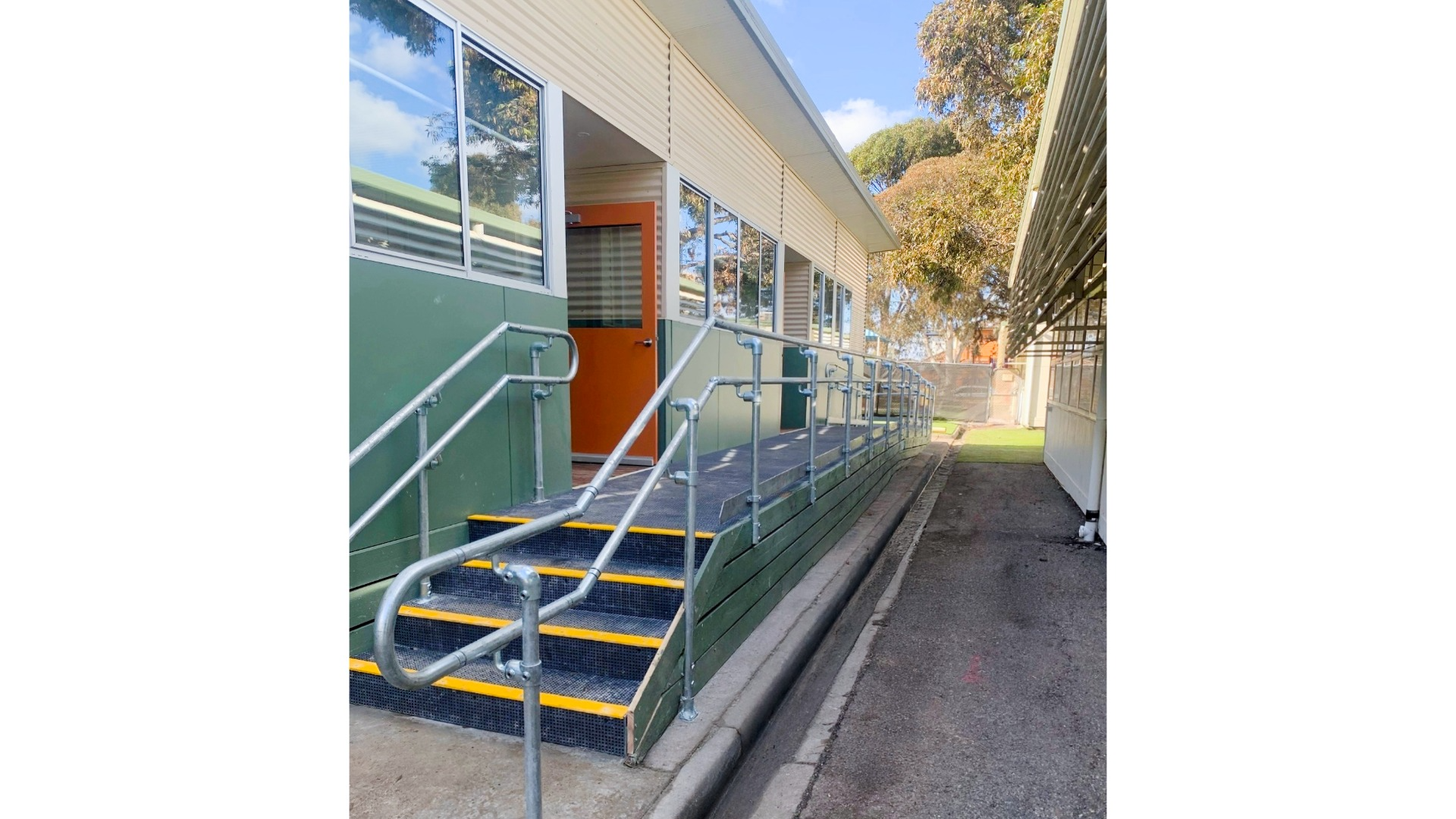
Why Councils and Education facilities gain the most
Councils
Councils oversee diverse, widely distributed assets and must balance performance, safety, and constrained budgets. FRP provides:
- Long-term durability across coastal, high-exposure, and public environments
- Predictable maintenance schedules with minimal unplanned costs
- Reduced asset closures during repairs
- Consistent compliance with slip and safety standards
This results in stronger ratepayer value and long-term asset resilience.
Education Facilities
Schools and universities face high foot traffic, strict safety requirements, and limited maintenance windows. FRP is particularly well suited to:
- Outdoor ramps, walkways, pedestrian links, and access platforms
- Service pits and maintenance areas
- Environments requiring non-conductive solutions
Its long design life and maintenance-free performance help education facilities keep infrastructure safer, longer—and with minimal disruption.
The shift toward lifecycle-driven infrastructure
As material costs rise, labour shortages grow, and operational budgets tighten, lifecycle value is becoming a key decision driver. FRP access structures address these pressures directly: they last longer, install faster, perform safely, and require almost no maintenance.
Organisations that look beyond upfront cost and consider whole-of-life ROI consistently achieve stronger long-term financial and operational outcomes. With proven performance and compelling economic advantages, FRP is emerging as the lifecycle benchmark for modern access infrastructure.
To explore how FRP could improve the whole-of-life ROI of your next project, contact our team.
Share this
Discover the Terra
Firma difference
Learn how we can help support your next project