

A fibre-reinforced polymer (FRP) access structure can meet the relevant Australian standard and still be the wrong fit for an exposed site.
Specifiers need to consider both the standards that apply and whether the FRP system can handle saltwater immersion, coastal wind, bushfire risk or difficult site access.
The three standards that most often shape these projects are AS/NZS 1170, AS 1657 and AS 4586.
Which standard applies?
The right starting point depends on what the structure will do, who will use it and where it will sit. The table below provides a quick guide before we look at each standard in more detail.
| Standard | What it covers | Where it applies |
| AS/NZS 1170 | Structural design actions, including imposed loads and wind actions | Public walkways, stairs, platforms and other structures |
| AS 1657:2018 | Fixed platforms, walkways, stairways and ladders | Workplace and maintenance access |
| AS 4586:2013 | Slip-resistance classification for new pedestrian surfaces | FRP grating used across workplace and public access structures |
More than one standard may apply to the same project. The structure’s purpose, users and location determine which requirements the design needs to address.
AS/NZS 1170 – what loads must the structure carry?
The AS/NZS 1170 series sets the structural design actions for walkways, platforms, stairs and other access structures. Public infrastructure must account for crowd loads and site-specific wind actions rather than the lower demands associated with occasional maintenance access.
FRP adds another design consideration. Its high strength-to-weight capacity suits elevated and cantilevered structures, but deflection often governs the design before ultimate strength.
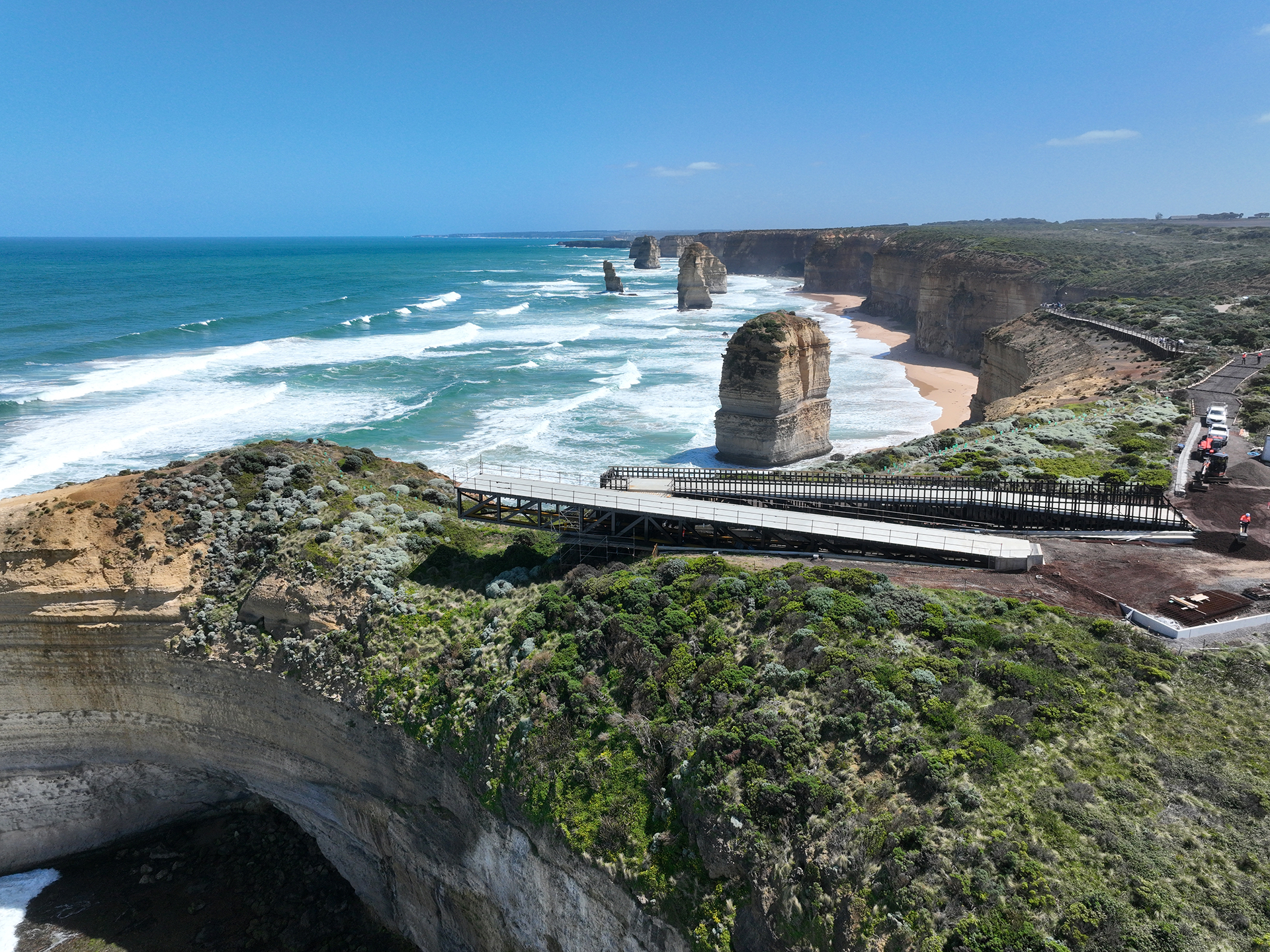
Case study: 12 Apostles
The 12 Apostles lookout and clifftop walkway put both structural and material performance to the test. The project combined:
- Crowd loads and coastal wind addressed through AS/NZS 1170
- Inclined, elevated and cantilevered components across challenging spans
- Intense salt spray and erosion in a sensitive coastal environment
Terra Firma supplied pultruded and moulded FRP grating that provided the required strength-to-weight capacity while reducing dead load and the need for supplementary supports.
AS 1657 – does the structure provide safe workplace access?
AS 1657:2018 covers fixed platforms, walkways, stairways and ladders used for workplace access. For FRP structures, it informs elements such as stairs, handrails and edge protection, alongside the structural requirements of the project.
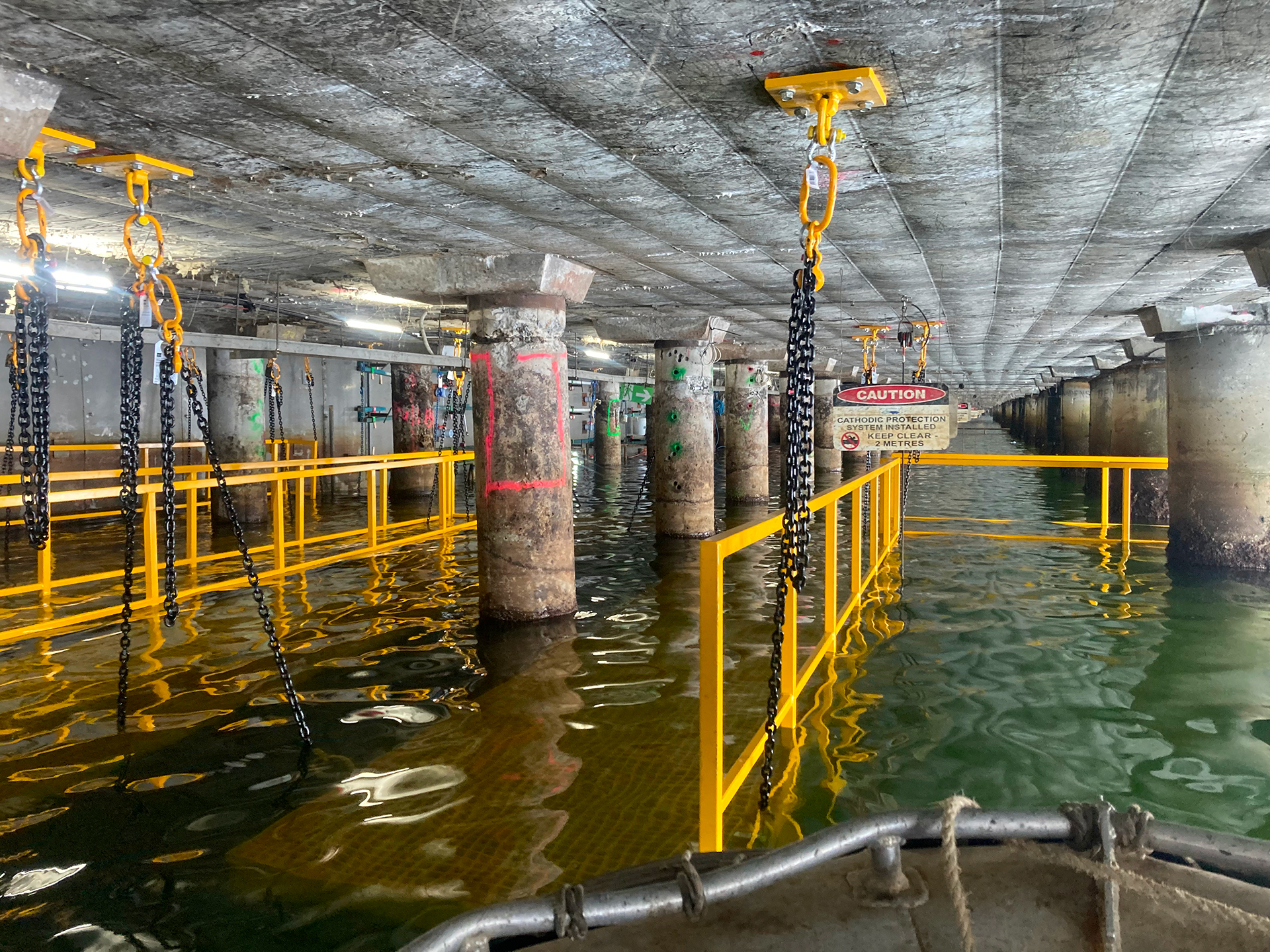
Case study: Swanson Dock
At Swanson Dock, DP World Melbourne needed a temporary maintenance platform hung beneath a working wharf. The project applied AS 1657 in an extreme maintenance environment with:
- Specific loadings for workers and equipment
- Constant saltwater immersion, tidal flow and marine growth
- Low-light and murky conditions beneath the wharf
- Limited access for lifting and suspending the platform
Terra Firma supplied lightweight, high-visibility yellow FRP moulded grating. The product could handle long-term underwater exposure while remaining visible to workers beneath the wharf.
For saltwater and other aggressive environments, Terra Firma’s chemical resistance table can help project teams compare FRP performance against the expected exposure. Download it here.
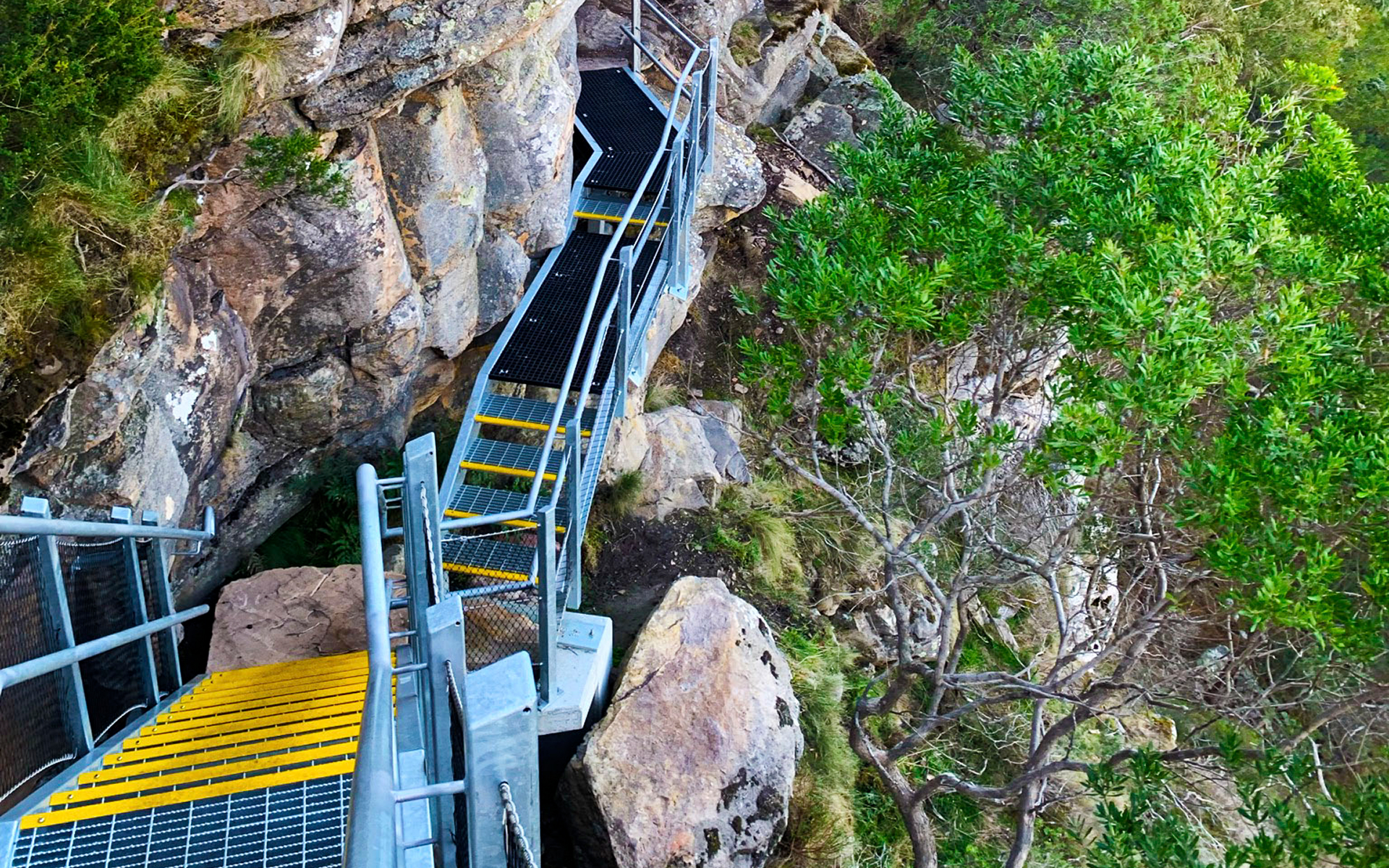
Case study: Mt Sturgeon
AS 1657 can also inform parts of a public access structure without governing the entire project. At Mt Sturgeon, it provided a reference for relevant staircase and handrail details, while AS/NZS 1170 addressed the public trail loads.
The remote, steep and fire-prone site required an FRP solution that could handle:
- Helicopter weight restrictions. Lightweight components reduced the loads and trips required to move materials up the mountainside.
- Limited work on site. Terra Firma cut and prepared the components off site so they arrived ready to install.
- Fire risk during installation. Installers could complete the work without welding, sparks or other hot works.
- Long-term outdoor exposure. The fire-retardant FRP walkway resists rot, corrosion and UV exposure.
Where a project requires an FRP fire rating BAL-40, Terra Firma can provide supporting test documentation for its BAL-40-rated moulded and mini mesh grating.
AS 4586 – how slip resistant is the surface?
AS 4586:2013 classifies the slip resistance of new pedestrian surface materials. Under the wet pendulum test, surfaces receive a classification from P0 to P5, with P5 as the highest class.
The required classification depends on the application and level of slip risk. Specifiers should only accept a P rating when the supplier can provide a current test report for the exact product proposed.
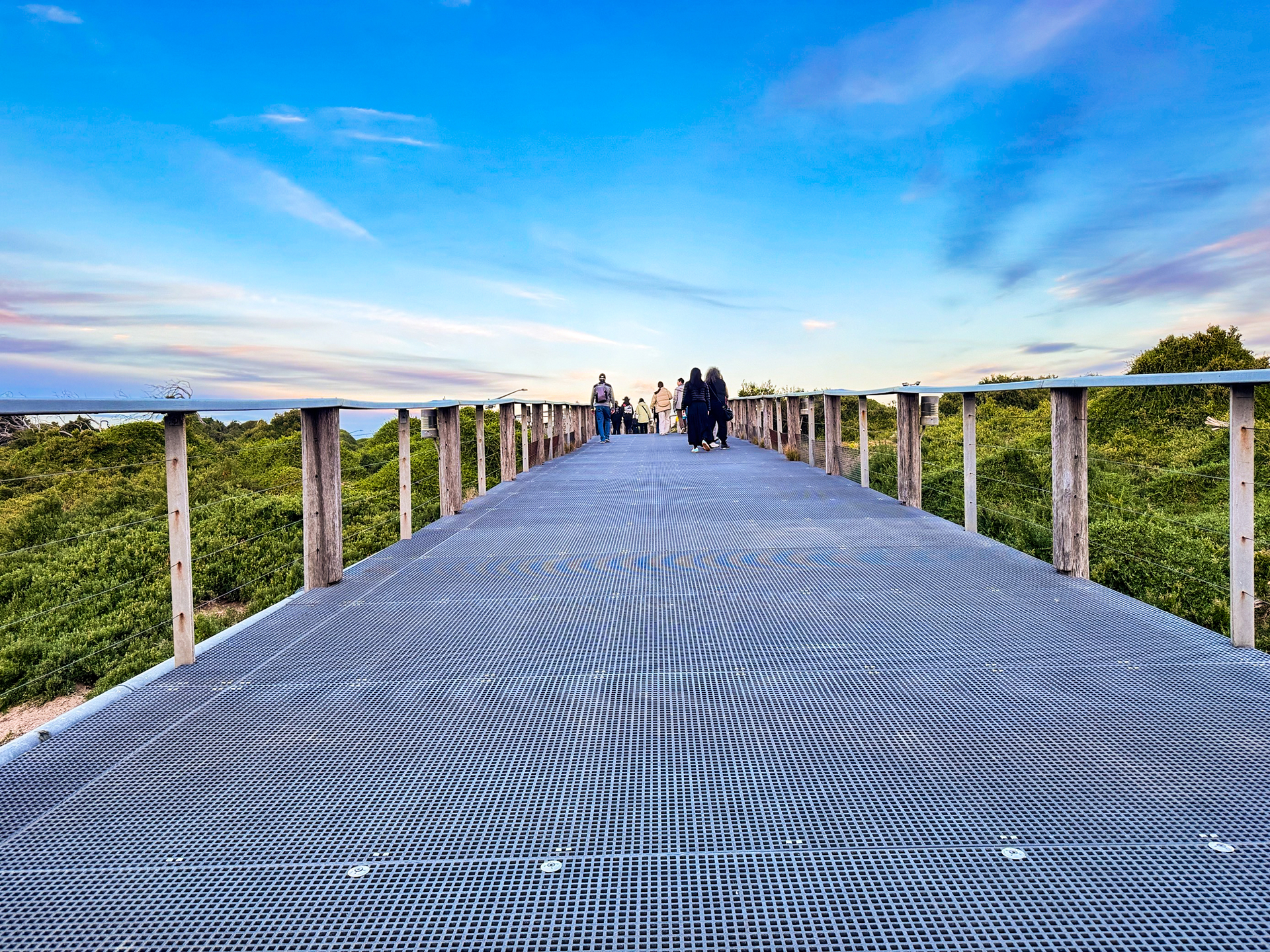
Case study: Penguin Parade
Penguin Parade presented a challenging crowd-loaded retrofit. The replacement surface needed to provide:
- FRP slip rating P5 supported by a test report for the specified product
- Low weight so the grating could fit the existing substructure
- Salt and rot resistance for long-term coastal exposure
- Fire-retardant performance suited to the outdoor site
Terra Firma supplied FRP mini mesh grating with an integrated gritted surface. The product met the P5 requirement while allowing the project team to upgrade the boardwalk without rebuilding the supporting structure underneath.
Three mistakes to avoid when specifying FRP
The right standard is only useful when the specification applies it correctly and asks for evidence from the supplier. These three mistakes can leave important structural, slip or fire-performance requirements open to interpretation.
- Applying AS 1657 to a public walkway. AS 1657 covers workplace access. Public walkways, lookouts and stairs need to account for the relevant structural actions under AS/NZS 1170, including crowd loads where applicable.
- Accepting a P rating without a test report. The report should cover the specific FRP product, profile and surface finish proposed for the project. Not every FRP grating product carries the same slip-resistance classification.
- Treating different fire terms as interchangeable. “Fire retardant”, BAL-40 and results under AS/ISO 9239.1 describe different aspects of fire performance. Where a specification calls for an FRP fire rating such as BAL-40, the supporting test report must cover the exact product and resin system. Specifications should use “fire retardant”, not “fire resistant”.
Request an engineering review
Terra Firma’s engineering team can review your drawings, project requirements and site conditions before you finalise the specification.
The team can help confirm the relevant standards, structural requirements, FRP system and supporting product documentation for your project. Early review allows Terra Firma to resolve these requirements during design rather than after tender. Talk to our team today.
Share this
Discover the Terra
Firma difference
Learn how we can help support your next project