

Marine and coastal infrastructure faces some of the harshest conditions in construction. Constant exposure to saltwater, UV radiation, and heavy traffic can quickly degrade traditional materials like steel and timber. For councils, ports, and contractors, this often translates to frequent maintenance, safety risks for crews, and higher long-term costs.
Fibre Reinforced Plastic (FRP) is increasingly being used to address these challenges, offering a corrosion-resistant, non-slip, and lightweight solution. The Gladstone Wharf Remediation Works provides a compelling example of how FRP can overcome these challenges while improving operational efficiency and extending asset life.
Corrosion and Durability: Solving Material Failures
Saltwater is unforgiving. Steel corrodes, coatings fail, and timber rots or splinters. For marine projects, these failures create additional costs and operational risks.
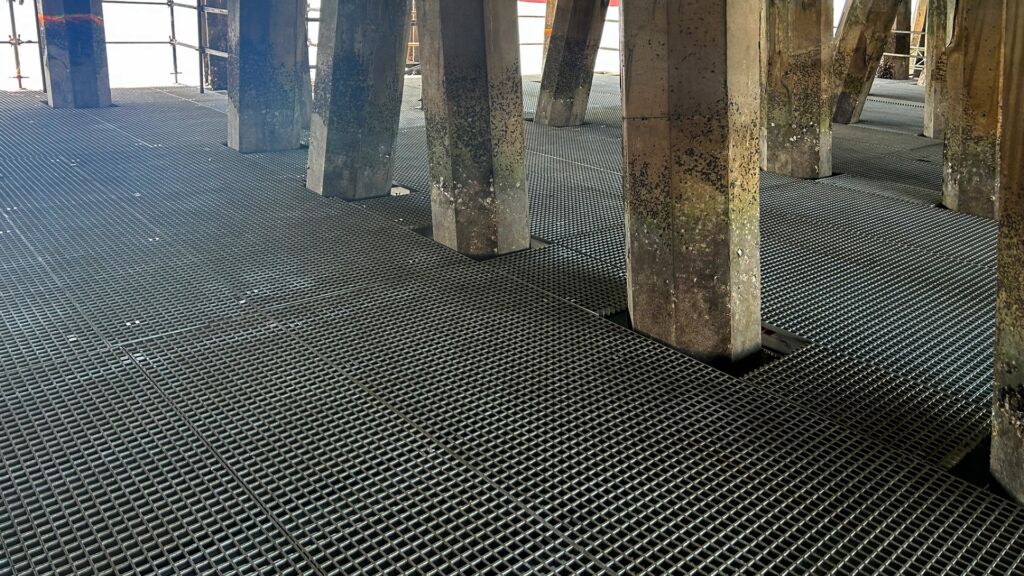
At Gladstone Wharf, maintenance crews required safe access to concrete piles beneath the wharf. Traditional scaffold decking was not suitable — it couldn’t guarantee stability, slip resistance, or long-term performance in a corrosive marine environment.
The FRP Solution: Terra Firma’s FRP Moulded Grating provided a non-corrosive, durable platform. Its resistance to saltwater and UV degradation dramatically reduces maintenance requirements and extends the working lifespan of the structure.
Worker Safety: Reliable Surfaces in High-Exposure Environments
Marine maintenance work involves confined spaces, wet surfaces, and exposure to tides. Slip hazards and unstable platforms are a constant concern, especially for contractors and asset owners responsible for safety compliance.
FRP decking can be manufactured with non-slip surfaces, providing secure footing even when wet. At Gladstone Wharf, crews were able to operate confidently, reducing downtime and minimising the risk of accidents.
Operational Benefit: Ensures safety compliance and protects crews while maintaining productivity.
Lightweight Performance: Faster Installation, Lower Operational Cost
Installing heavy steel or timber decking in marine environments is labor-intensive, requires extra equipment, and increases structural load. FRP’s high strength-to-weight ratio solves these problems.
At Gladstone Wharf, FRP decking simplified installation, reduced manual handling, and allowed crews to work more efficiently. Less time on site translates to reduced labor costs and faster project completion — a clear return on investment.
Superior Lifecycle Value
Traditional materials may appear cheaper upfront but often incur hidden costs:
- Steel: Requires coatings, frequent inspections, and eventual replacement due to corrosion.
- Timber: Prone to rot, splintering, and UV damage; short operational lifespan.
FRP minimises these recurring expenses. By choosing FRP, councils, ports, and industrial operators benefit from:
- Lower maintenance and repair costs over the asset’s lifecycle
- Longer service life for infrastructure exposed to marine conditions
- Safer working conditions, reducing the likelihood of accidents and associated costs
- Reduced installation time and labor costs
The Gladstone Wharf project demonstrates how FRP addresses multiple challenges — corrosion, safety, installation efficiency — while delivering measurable value over steel or timber alternatives.
Durable, Safe, and Cost-Effective: FRP for Marine Infrastructure
FRP is becoming the preferred material for challenging coastal and industrial applications. Its combination of corrosion resistance, non-slip performance, lightweight strength, and long-term value makes it an ideal choice for councils, ports, and marine contractors.
Projects like Gladstone Wharf Remediation Works show that investing in FRP is not just about durability — it’s about protecting workers, reducing maintenance, and maximising the return on infrastructure investment.
To discover how FRP solutions can enhance safety, efficiency, and longevity for your marine infrastructure projects, contact Terra Firma Industries today for expert advice and project-specific recommendations.
Share this
Discover the Terra
Firma difference
Learn how we can help support your next project