

Beyond the Point of Specification
For asset managers and procurement teams, the specification decision doesn’t end at installation. The real question is what a product delivers across a 10, 15, or 20-year service horizon — particularly in utility environments where access infrastructure is subject to chemical exposure, variable loading, and ongoing operational demands.
Composite access covers and FRP grating products have gained significant traction across water treatment, wastewater, and electrical utility applications. Yet much of the available information focuses on the point of specification: material properties, load ratings, and installation advantages. Less attention is given to what long-term composite performance actually looks like in practice — and what asset owners should be evaluating when they assess whether a product is delivering lifecycle value.
Why Utility Environments Are a Meaningful Performance Test
Composite materials — primarily fibre reinforced polymer (FRP) — were adopted in utility infrastructure specifically because of the limitations of traditional materials in demanding service environments.Steel corrodes. Concrete cracks under cyclic load. Ductile iron corrodes too — covers seize to frames, lift points degrade, and in more severe cases structural integrity is compromised, often without obvious visible warning.
These environments combine the very conditions that drive accelerated degradation:
- Water treatment and distribution: Constant moisture, UV exposure at above-ground installations, and variable foot and vehicle traffic
- Wastewater treatment plants (WWTPs): Hydrogen sulphide, biological activity, chemical dosing residues, and submerged or semi-submerged installation conditions
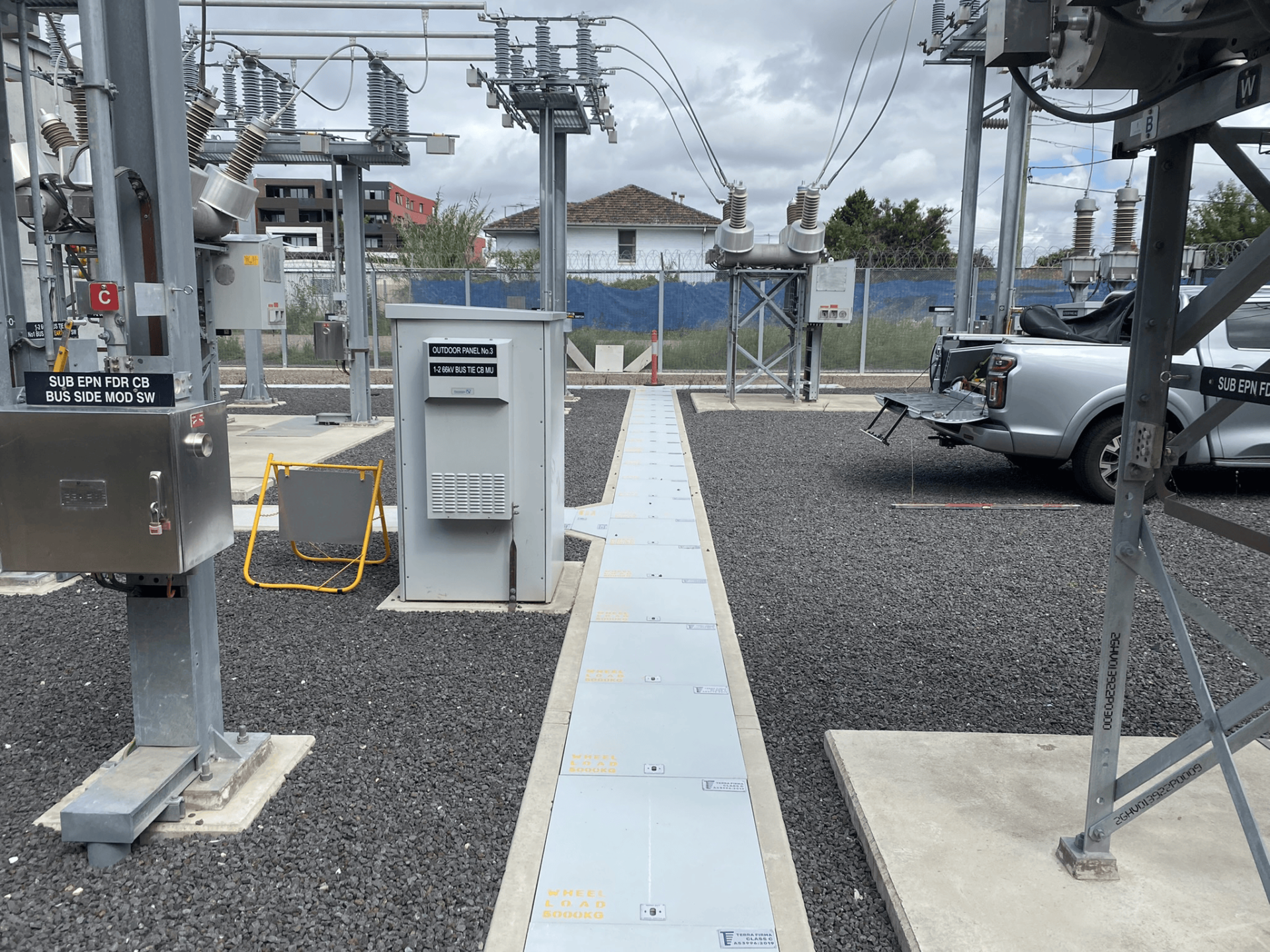
- Electrical substations and infrastructure corridors: UV exposure, thermal cycling, and the need to maintain electrical isolation properties over time
Each of these environments places specific demands on access infrastructure. Understanding how composite materials behave under these conditions — and what performance looks like at year five, ten, or fifteen — is directly relevant to any asset replacement or specification programme.
Surface Integrity: What Changes and What Doesn’t
One of the more visible indicators of composite performance is surface condition. Over time, FRP surfaces exposed to UV will undergo a degree of surface degradation — technically referred to as weathering or chalking — where the resin-rich outer layer gradually recedes, exposing the underlying glass fibre matrix. This is a normal material characteristic, not a structural failure mode.
For access covers specified in outdoor utility environments, UV-stable gel coats or surface veils can significantly slow this process. Where products have been properly specified with appropriate surface protection, surface integrity typically remains acceptable across a 15–20 year service period without intervention.
What this means practically: the cosmetic appearance of a composite cover may change over time, but this does not correlate directly with structural or load-bearing performance — provided the product was correctly specified at installation.
For asset managers, the relevant performance indicator is whether the cover continues to meet its load classification under AS 3996:2019 and maintains its dimensional stability. Surface chalking alone is not an indication that replacement is required. Reputable suppliers will ensure surface veils are incorporated across their product range to minimise chalking and maintain long-term aesthetic appeal — a worthwhile point of confirmation at the specification stage. Where surface weathering does progress over time, re-coating can be an effective measure to extend service life and restore appearance without the cost of full replacement.
Load Retention and Structural Behaviour Over Time
Composite materials, correctly specified, are not susceptible to the same fatigue and corrosion-driven degradation that limits the service life of steel or cast iron access covers. FRP does not rust, and the structural properties of the glass fibre reinforcement are not chemically degraded by the moisture and atmosphere present in typical utility environments.
Under sustained static loading — such as covers installed in low-traffic pedestrian zones — composite access covers maintain their load-bearing properties effectively. The relevant consideration in high-cycle traffic environments is the fatigue performance of the composite layup and any embedded hardware, including hinges, lift points, and locking mechanisms.
For products specified under AS 3996:2019 load classifications (Class A through to Class E), the structural rating should reflect expected service conditions over the product’s intended life. Asset managers reviewing composite covers in service should consider whether the installation environment has changed since original specification — increased vehicle access, for example — rather than assuming structural degradation has occurred in the absence of visible damage.
Corrosion Behaviour in Chemical Environments
For wastewater and water treatment applications, corrosion resistance is the primary reason composite materials are specified in the first place. The performance record here is well established: FRP does not corrode in the way ferrous metals do, and is resistant to a broad range of acids, alkalis, and biological agents commonly present in wastewater environments.
In environments where hydrogen sulphide (H₂S) is present — which is standard in active wastewater collection and treatment systems — cast iron and mild steel access covers can experience significant degradation of both the material itself and any protective coatings. Correctly specified composite covers, incorporating an appropriate matrix resin for the exposure environment, are not susceptible to this mechanism.
The practical performance implication: composite access covers installed in correctly assessed wastewater or chemical utility environments should not require replacement due to corrosion across a 20-year asset life, assuming the original resin specification was appropriate for the application.
Maintenance Frequency: What to Expect
One of the primary lifecycle advantages claimed for composite access infrastructure is reduced maintenance demand.
Composite access covers do not require:
- Regular lubrication of exposed ferrous components (where non-metallic hardware is used)
- Structural inspection for rust-induced cracking
What periodic inspection should cover:
- Frame seating and cover fit, particularly in environments subject to ground movement or thermal cycling
- Condition of embedded hardware and locking mechanisms
- Surface condition where anti-slip properties are relevant to WHS compliance
- Any evidence of impact damage, which can cause localised delamination in composite materials
For most utility applications, annual or biennial inspection intervals are reasonable for composite access covers, with maintenance intervention only where specific issues are identified. This compares favourably with painted steel or unprotected cast iron, which typically requires more frequent inspection and periodic re-treatment. Where re-coating is undertaken, it is typically only warranted at 20+ year intervals rather than as a recurring maintenance item.
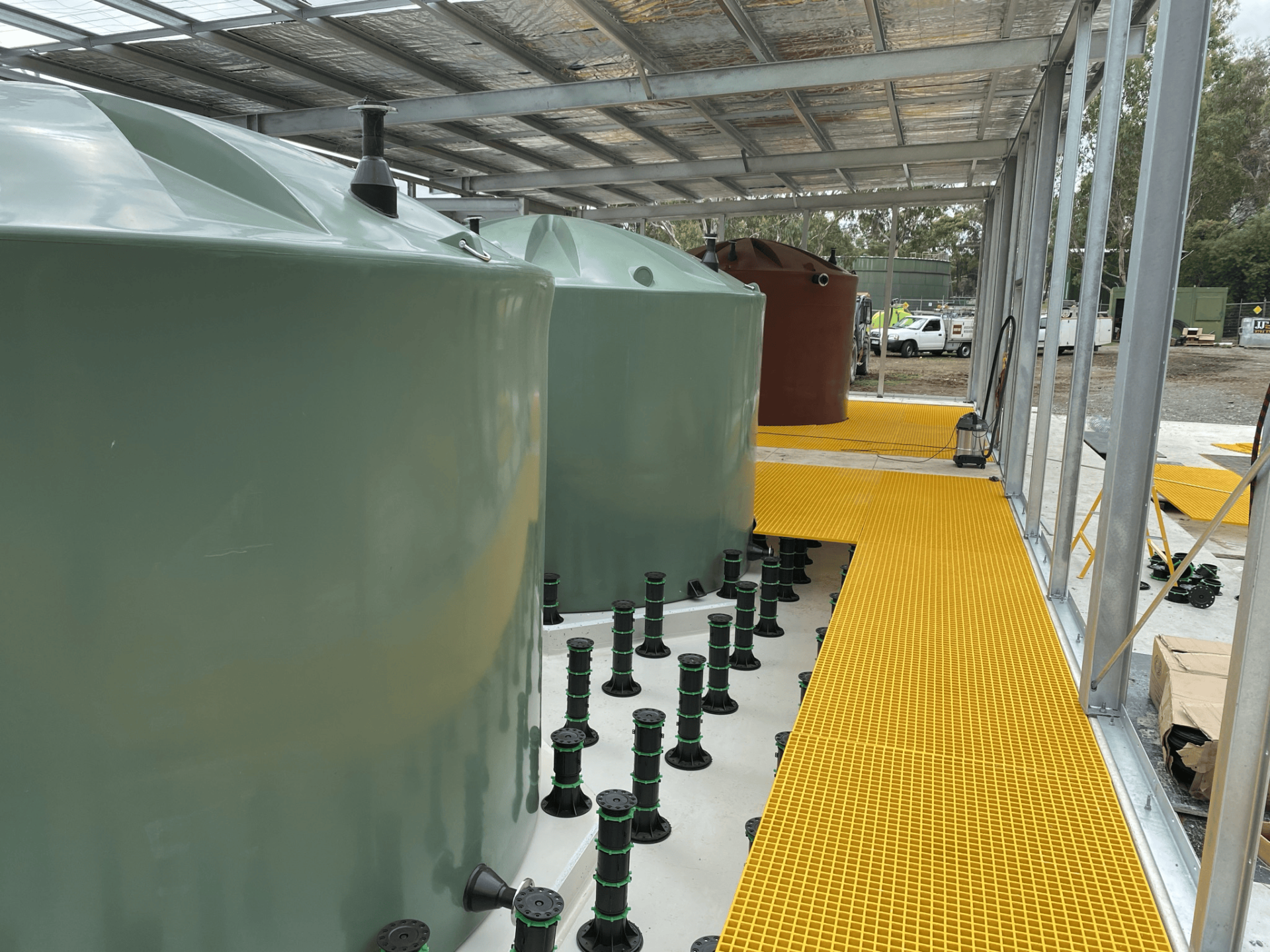
For FRP grating in elevated or walkway applications — such as platforms at WWTPs or electrical substations — periodic inspection of connection points, fasteners, and panel-to-panel joints is recommended, with the grating panels themselves expected to perform without structural replacement across a 15–20 year horizon in most utility service environments.
Replacement Avoidance: The Lifecycle Value Calculation
Asset replacement decisions are driven by a combination of structural condition, maintenance cost trajectory, and risk profile. For composite access infrastructure, the lifecycle value case rests on several compounding factors:
Lower replacement frequency. Where composite products perform to their design life without premature failure, the direct cost of replacement — materials, labour, traffic management in public asset contexts, and disruption to utility operations — is avoided or deferred.
Reduced maintenance cost accumulation. Across a 10–20 year asset life, the absence of routine coating or structural repair reduces total cost of ownership relative to alternatives that require active maintenance intervention.
WHS and manual handling benefits. The weight differential between composite and cast iron access covers is material in high-density networks. Lighter covers reduce manual handling injury risk over the life of an asset, with benefits that accumulate across repeated access events — inspection, sampling, maintenance — over the service period.
Compliance alignment. For councils and utilities operating under ongoing compliance obligations — whether AS 3996:2019 for load classification, AS 1170 for structural loading, or relevant WHS legislation — composite products specified to the appropriate standard provide a documented compliance position that supports asset management records.
Specification Determines Performance
Composite access covers and FRP products are not maintenance-free, but they are significantly lower-maintenance than the ferrous alternatives they replace in utility environments. Their long-term performance — surface integrity, load retention, corrosion resistance — is largely determined at the point of specification, not discovered after installation.
For asset managers assessing whether composite infrastructure is delivering value across a 10–20 year horizon, the performance indicators are clear: reduced maintenance frequency, corrosion resistance in chemically challenging environments, and structural compliance across the product’s rated load classification.
The post-installation conversation is one that the infrastructure sector is increasingly focused on. Composite materials are well-positioned to meet it — provided the original specification was matched to the application.
Share this
Discover the Terra
Firma difference
Learn how we can help support your next project